The 1745 Association       Surely you've got the hang of this by now!Click the Highlander

Courtesy All things Scottish


Letters to Lewie  


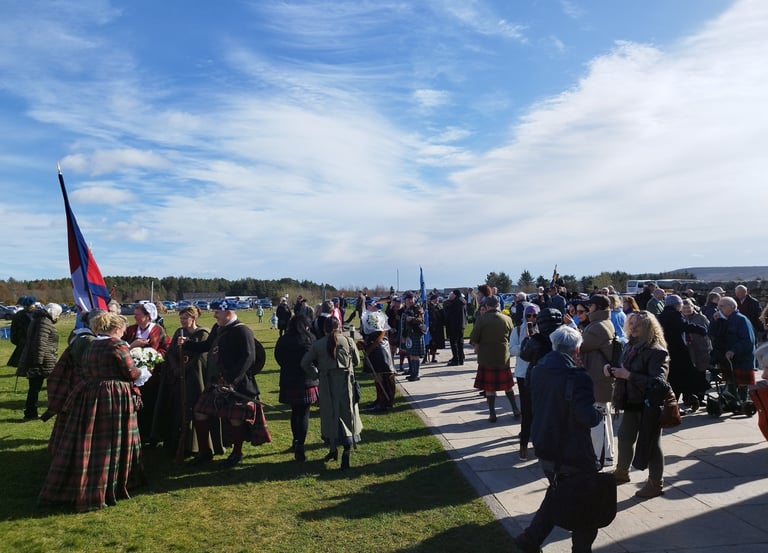
Jacobite Monument at Glenfinnan


This is a place to which members (and others) may write letters to the 1745 Association.  

Webmaster Lewie Caw welcomes your correspondence. He prefers email to Letters to Lewie  but will accept snailmail to:

Lewie Caw,

2 Mill St,

Eynsham, Witney,

Oxon, OX29 4JS

UK


Letters will not be accepted without the name of the writer. 

The name of the writer will be published. 

Geographical addresses will not be published. 

Email addresses will not be published unless the writer requests otherwise.

Lewie reserves the right to edit letters and to publish or not at his own discretion. Please try to keep your letters fairly short.

At present and until further notice letters will be removed from the site one month after publication. However, all  letters will be archived for possible future reference.


27.07.08

From Mr Scott Ward  (Contact Scott here)

Hi Lewie,
I was wondering if any fellow members can help me with further investigations regarding a sword in my collection, i have a letter from Lord Lyon office informing me the coat of arms on the blade was registered to a Thomas Milne in 1672, the only other info i have it was used by his grandson Alexander Milne at Prestonpans where basket was damaged, repaired & at Falkirk the blade was broken off to 20" & re-sharpened, he then fought at Culloden with Ogilvy or Gordon. This is a far as i can go & would appreciate any help with this, i also have quite a few more pre-1745 antique swords if any members want to swap pictures or just have a look,
 
I look forward to hearing your reply
 
Regards
Scott Ward


Dear Scott

                 What an interesting story. Your collection must be fascinating.
I cannot help you with your investigations but perhaps there is someone who will read this letter who can be of help.
 
If you have not done so already and as the sword was used at Prestonpans then you might get in touch with the Prestonpans Heritage Trust http://www.battleofprestonpans1745.org/heritagetrust/default.aspx
 
They might be able to help and even if they cannot they will be very interested I should think.

Lewie


19.07.08

From Mr Florian Saamen

Dear Ladies and Gentlemen,

Me and my Girlfriend are Reenactors (Jacobites 1745/46) from Germany.

We do Scottish Jacobites from the 1745/46.

I hope you understand if I need a "Battle ready" Targe for the Presentation!

I know that my question sounds a bit strange...

I'd like to try build the targe with my own Hands!

For this, I need some information about the Lord Lovat's Targe.

So I hope you can help.

I remain respectfully yours,

Florian Saamen


Dear Florian

                      I am afraid my knowledge of targe making is a bit limited! However, there are plenty of targe makers on the internet who might be able to give you advice. You might also take a look at http://en.wikipedia.org/wiki/Targe

Here is a picture of a reproduction targe reputed to have been owned by Simon Fraser Lord Lovat The Fraser targe


Lewie


11.07.08

From Mr Michael Merrgan

Lewie, a Chara,
 
Greetings from Dublin, Ireland.
 
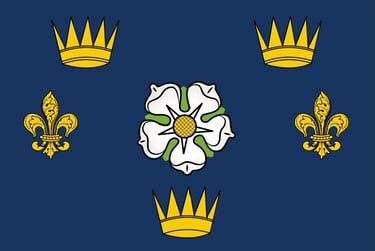
Just a quick question for you regarding the Association's Coat of Arms, would you be able to explain the significance of the symbolism and possibly, indicate from what heraldic authority, if any, they were obtained ad when.
 
They do look very impressive indeed.
 
By the way, attached, please find a copy of "Ireland's Genealogical Gazette" the monthly newsletter of the Genealogical Society of Ireland, in which, I hope to carry a piece on your Association. Ireland's_Genealogical_Gazette_-_July2008_PDF[1].pdf
 
Go raibh maith agat,
 
Mise le meas,
 
Michael Merrigan
General Secretary
Genealogical Society of Ireland
www.familyhistory.ie


Reply from Miss C.W. Aikman Secretary 1745 Association

Dear Michael
 
In answer to your query. 
 
Shield - 3 crowns; Scotland, England & France; the jacobite white rose supported by 2 fleur-de-Lys.
 
Crest; 2 crossed Lochaber axes supporting the Standard of Prince Charles Edward Stuart.
 
Motto; "Tandem Triumphans" is Let It Triumph.
 
This coat of arms has been devised by the staff of the Lord Lyon and approved by him.
 
Christian Aikman
Secretary
1745 Association


26.06.08

From Mr Jim Cheyne

Dear Lewie,
 
In all your readings have you ever come across the Aboyne Battalion or the Abine Battalion from Deeside?
 
Enjoying the side.
 
Thanks.
 
Jim Cheyne.


Hello Jim
              There was a Jacobite force raised from Deeside. Lord Lewis Gordon was responsible for raising it and Francis Farquharson of Monaltrie and James Moir of Stoneywood were appointed Colonels. Francis' cousin was the famous female Jacobite Lady Anne Mackintosh.
 
Farquharson is buried in the old Crathie kirkyard. Today the kirk is best known for for its most famous worshippers, a family not known for great sympathies to the Jacobite cause.
 
Those interested may find more at the Clan Farquarson website http://www.farquharson-clan.co.uk/content/history/francis_farquharson.htm
 
 
Lewie

27.06.08

From Mr Jim Cheyne

 
Hi Lewie,
 
Many thanks for the information you gave. I don't know if you would be interested but I will give you the information I have on the Aboyne battalion.
 
From the Legends of The Braes O' Mar by John Grant, my copy dated 1876. "On the 15th January, 1746, just two days before the battle, Lewis Gordon writes from Bannockburn to Moir of Stoneywood and Farquharson of Monaltrie, commanding officers of the Aberdeen and Aboyne battalions, ordering them to joing the main bodyof the army forthwith".
 
From The New Statistical Account of Scotland Vol. XII. Aberdeen. Page 1063 Aboyne and Glentanner, footnote: In 1745-6, a battalion, named by Lord Lewis Gordon "the Aboyne battalion", and commanded by Farquharson of Monaltree, beat the Macleods at Inverury and, in the fierce onslaught at Culloden, cut through "Burrell's Blue".   The survivors who returned from that eventful field are all now beyond the din of war. The writer remembers seven or eight of them, and has often heard from them an account of their disastrous adventure".
 
 
Regards.
 
Jim.

Hello again Jim
                      Yes, we certainly are interested. It's always good to hear from someone with knowledge of the '45 and associated matters. I am no great expert compared with some so am always willing to learn more, as are all our members.
 
I have looked at our membership lists and so far as I can see you are not yet a member of the 1745 Association. Perhaps you might like to consider joining. You would be most welcome.
 
Lewie

30.05.08

From Mr Alastair Cunningham

Dear Lewie,

 I am leading a tour of Jacobite locations in Paris and environs this September and since I have four or five spare places, I wondered if this might be of interest to any of your members?

  Best Wishes,

 Alastair Cunningham

Scottish Clans and Castles Ltd

 Tel. (44) 1667 456942 Fax. (44) 1667 455499.

 www.clansandcastles.com

  Registered Address: The Old Stables, Househill, Nairn, Scotland IV12 5RY.

Just in case you have not had enough touring etc. with our Annual Gathering and the trip to Bergues, I offer this from Mr Cunningham. Neither the webmaster of the 1745 Association nor the association itself take any responsibility for the quality of the products of this company. However, Mr Cunnigham wrote to me and as the tour to Paris sounds of interest I include it for website users information and possible benefit.

Lewie

From Mr John Rae

Lewie,
            Does the Association recognise Stewarts of Balquhidder?
 
Regards,
 
John Rae, descendant of John Stewart of Glenbuckie who was a Moss Laird on the Blair Drummond Moss.


Hello John
                You will forgive me for not being too knowledgeable about the Stewarts of Balquhidder. I have had a look at the Research Group pages where there is clearly a lot of valuable work going on http://www.chuckspeed.com/balquhidder/balquhidder%20stewarts.html. I presume you are a member?
 
I did not know that the Stewarts of Balquhidder were not "officially" recognised but note remarks to that effect.
 
Clan Association

There is no official registered Clan Association for the Stewarts of Balquhidder.  Nevertheless this branch of the Stewarts is no less legitimately described as a clan than would be the Stewarts of Appin, Atholl, Bute, or Galloway, etc.  The others are, today, simply better known and better organized, each with their own tartan and clan officers. As there is no official clan association, likewise there is no official clan motto.

 It is not within the remit of the 1745 Association to take up particular causes or affiliate itself with any individual group. You will note that our objectives are


1) To study the Jacobite period.

2) To record and preserve the memory of those who actively participated in, or who had


     connections with the '45.

3) To mark the appropriate historical sites.


I thank you for your interest in our Association.  Those with a personal view may wish to comment.

Lewie


19.05.08

From Mr Earl "Rocky McIntosh

Dear Lewie

My name is Earl M. Mackintosh, III.  We are from the Washington, DC area. My wife and I will be traveling to Scotland for 11 days this August.  It will be our first trip there and we will be bringing along my mother (age 81) and her sister Carolina Ferguson Finley (age 70). We are planning visits to the clan homes/castles of Ferguson (Kilkerran), Mackintosh (Moy) and Finley/Farquharson (Braemar). 

Most specifically, I am interested in contacting someone (a genealogist or tartanologist) who may be able to assist me in drawing a link with my McIntosh ancestors who left the Inverness area for the Washington DC (Maryland Virginia) USA area in the 1790's.  My guess is that they were part of the Clearances, but thus far I have not made contact with any Scottish researchers. 

Would you have any recommendations for someone that I could contact?   

We will be staying in Edinburgh August 21st to the 24th, and then driving to Inverness on the 24th until the 27th.  We plan to visit the Culloden battlefield while there.

I look forward to receiving a response in the near future. Thank you in advance for your attention to this request.

Sincerely,

Earl "Rocky" Mackintosh


Anyone able to help with Rocky's requests? His emai address is rocky@macroltd.com. Or you can contact  me and I will pass the info on.

Lewie


19.05 08

From Mr Thomas Adam

Dear Lewie
 
1.Being a newcomer to your site I was wondering whether Sir Archibald Primrose was it? who was executed at Carlisle was the husband of Lady Primrose who put the Prince up during his trip to London c1750
 
2. My 'credentials' are that via my Granny I am descended directly albeit via the distaff line from the Robertsons of Struan, two of that family being killed at Culloden
 
3. However being more of a Gordon than anything else, Scottish wise I was looking for a list of 'volunteers' even if forced out of those in the Lewis Gordon battalions or the Glenbuckat regiment. I found one a while back but it seems to have been withdrawn or is it just me. Histories give the impression that only one of Lord Lewis's units by now very understrength and largely consisting of old men and boys was at Culloden but in any case they all, including Glenbuckats ran after one volley those that had firearms that is !
 
4. Finally one if not the main reason for Jacobite failure in England and London in particular was the 'French connection' which I pointed out in a series I wrote some moons sgo. To Scots in the North the limited French support might have been seen as a belated extension of the 'Auld Alliance' but to everyone else it was the national enemy and high treason. If London had fallen to the Prince and columns of French troops arrived would they have been welcomed as liberators, I rather doubt it. Was it not a catch 22 situation. for Charles Edward? He probably couldn't have done without them but on the other hand their presence would have worked against him. If and its a big if he had somehow defeated or evaded Cumberland and even Wade and routed the Guards and militia at Finchley could he have called off the French on time. and would the French have been able to resist the triumph of occupying the English capital albeit for a short time or indeed would Charles have been able to stop them. This apart how much faith was there in Anglo/ Welsh potential which as the Highland army approached the 'home counties' could be said at best to be patchy, What too about the army trapped in London surrounded by 3 armies and no way out. These and like thoughts must have prevailed in Derby and Lord George with all his defects was a consummate professional .
 
Thanks very much,
rgds, Tom


Unfortunately I am away from home at the moment and for another couple of weeks and so have no access to my Jacobite library. As such answering your questions might not be too easy for me at present. However there are many readers of the letters page and hopefully someone will offer additional help and information.
 
1. I am not quite certain but I do not believe that the Archibald Primrose executed at Carlisle was the husband of Lady Primrose of Essex St in the Strand, London. As far as I remember she was called Anne and I think married to Hugh Primrose who was possibly Archibald's cousin. I refer you to the short piece by Samantha Lawson on http://www.bbc.co.uk/wales/northeast/sites/askalocal/pages/hist30.shtml and also to http://en.wikipedia.org/wiki/Earl_of_Rosebery where there is a little more information.
 
2. Your "credentials" are impeccable.
 
3. Can't help you with this one at the moment. Maybe someone else can?? Lists of men in the various Jacobite regiments are to be found in "No Quarter Given- The Muster Roll of Prince Charles Edward Stuart's army". That might be useful. I have a copy but not with me at present.
 
4.  Can't argue with you here. I think that any student of Jacobite affairs would agree with most of what you say. With regard to your thoughts on Lord George there are two schools. Either he was a "consummate professional" as you say or he was the Prince's worst enemy who lost his courage at Derby and so condemned the campaign to failure. Personally I think he knew all was lost anyway and withdrawal was simply a pragmatic decision.
 
Lewie


15.04.08

From Ms Yvonne Divak

I am a new member. If you have already answered these questions in The Jacobite, I apologize. 
1.  Where are the executed soldiers of Carlisle buried?

The defenders of Carlisle were mainly men of the Manchester Regiment although there were Scots and French in the garrison as well. After the fall of the city to government forces those captured were tried and sentenced. I believe that 96 were sentenced to die but only 31 were actually executed, the rest being pardoned or transported. I do not know where most of them were buried. However a number, including the commanding officer of the Manchester regiment Colonel Francis Towneley, were taken to London and executed at Kennington. (See "A Day Out in London")

There is a village about nine miles from Carlisle called Brampton where the  "Capon Tree Monument"  commemorates the men executed there 

"This stone is placed to mark the site of the ancient Capon Tree under whose shade the judges of assize rested and upon whose branches were executed October XXI MDCCXLVI for adherence to the cause of the Royal Line of Stuart, Colonel James Innes, Captain Patrick Lindesay, Ronald MacDonald, Thomas Park, Peter Taylor, Michael Delard".


2.  Is there a book or article about the Carlisle and the Jacobite soldiers abandoned there?

Try Prince Charlie in the Borderland by David Beattie

The Jacobite army in England by Frank McLynn

See Jacobite Library for details


3.Has anyone commented on the book, "The '45," by Christopher Duffy?  I have never been to Scotland (though I hope to go sometime), or to England, so I found the maps and descriptions of the towns and villages very useful.  I have read a great deal about Culloden, but not about the rest of the Rising, so I thought Mr. Duffy put the battle in excellent perspective.

Christopher Duffy's book is indeed a most valuable work on the '45. He is a member of the 1745 Association.

4.  Is it true, as Mr. Duffy implies, that Prince Charles was within a cat's whisker of taking London, and that only cold feet on the part of his advisors kept him from doing so?

This is a straight forward question but has a complex answer. This answer is my personal opinion and not that of the collected wisdom of this Association. It is also necessary to remember that we see these events with the benefit of hindsight. We know what happened after the decision to withdraw was made. The Prince did not.

The short answer is "Yes". I believe that had the Jacobite army advanced they could have outwitted and outpaced their opponents and entered London virtually unopposed. It is even possible that George would have scuttled off to Hanover waiting to see what happened next. However, having "taken" London they could not have held onto it for long and the final battle would have been in or near London and not at Culloden. In order for Prince Charles to have held onto London then there would need to be a popular groundswell of support for him with thousands joining the army and many, many more offering verbal support. As had been crystal clear since the army entered England such support was not forthcoming (except for the couple of hundred who joined in Manchester and the rest of Lancashire).

Lack of English, Welsh and French support plus misinformation about the size of the forces waiting for them north of London convinced clan chiefs and in particular Lord George Murray that the Rising could not succeed at this attempt and that the only hope (and a slim one at that) was withdrawal. Withdrawal did not mean moving the army to a  nearby safe Jacobite area for there was none. The only place the Jacobites could feel fairly secure was in the Highlands, and even this part of the country was not universally sympathetic. Was it a good decision? The truth is that by this time there was no good decision. Lord George is variously seen as the Prince's best commander and as a traitorous scoundrel. Take your pick. Whatever else he was, on this occasion at least he was a pragmatist. He knew, I feel, that the game was up. Advance meant certain defeat even if London was taken. Withdrawal provided the slight hope that the winter could be passed safely in the Highlands and further support might yet be forthcoming from those who to this point had not bestirred themselves. It was not to be.

There may be many in the Association who do not see the situation as I do. I invite further comment.


I received my first issue of The Jacobite, and I enjoyed it very much.
                         Thank-you.  Yvonne Divak 


15.04.08

From Mr Stephen Lord

Dear Lewie

There is a painting in Blickling Hall, Norfolk which some think to be General Sir John Cope as a young man. Does the 1745 Association or indeed any of its members have any thoughts on this opinion?

Steve Lord


11.04.08

From Mr Martin Margulies (Author "The Battle of Prestonpans 1745")

Dear Lewie,
I see that you now have the entire text of Duncan Forbes' Culloden Papers on your website.  I wish I'd had access to that one when I was doing my research -- but, search though I might (and I also had a very capable search agent working on my behalf) I could not locate a copy except in libraries that were too distant for me to travel to them.  I did get hold, for something like two hundred dollars, of More Culloden Papers, but it is not nearly as rich a treasure trove for Prestonpans-related materials as its predecessor.  On the other hand, though, CP has so much stuff that it might have significantly delayed completion of the manuscript, which might in turn have exhausted my publisher's patience, and nothing I've seen in the on-line edition so far would have altered my conclusions.  I hope you'll keep it up there for a while until I've mined it.
  
Martin

You will be pleased to know that the association has no plans to remove 'Culloden Papers' nor any of the other on-line books from the site. Sorry it was not available when you really needed it!

Lewie

I


05.04.08

From Ms Debby Swanson

Hi,   I am a descendent of the Looney family originally from Ireland, IOM, and Scotland. The closest I have found is the MacPherson Clan with the names Cluny, Cloony and so on.  There are many deviations to the name especially when they came to America.  It has been spelled Luny, Louny, and loney.  Do you have any info. on the spelling Looney or other, being from the Clan McPherson? I would love to know where the Looneys were in Scotland for sure.
 
Thank You, Debby Swanson

Any ideas anyone? A quick "Google" came up with this http://www.houseofnames.com/xq/asp.c/qx/looney-coat-arms.htm

Lewie

25.03.08

From Mr James Lamont

Hi Lewie, a wee while ago I wrote to you regarding my dissertation about the Jacobites in Atholl. It is nearing completion now and I must say that the letter I received from the secretary was most useful. One quick question I have, and I figured this would be the logical place to ask, is that somewhere in a book, and I can't remember which, I have came across a Jacobite lady being referred to as "that damn rebel bitch". What I am wondering is do you know who this woman is and who it was that called her this? I am aware of the book by the similar title but I cannot find any reference to it in there. if you know the answer it would be excellent for you to get back to me.
kind regards
 
James Lamont


26.03.08

From Mr David Donachie of Brockloch

Dear Lewie,


With reference to James Lamont’s letter "That damn rebel bitch" 26.3.08, I do believe it is mentioned somewhere in the book of similar name by Craig.

I am not sure if the wording was; ‘damned rebel (or) Jacobite bitch’.  Unfortunately my copy is currently boxed away, but from memory, I think it refers to a letter from a lady from the Leith area, who anonymously penned a letter to a friend, on what had recently happened to Lady Lochiel and herself, by Hanoverian government troops who were looting and ill treating Jacobite sympathisers left behind, when Prince Charles had left Edinburgh for England.


I hope this may assist a little. 


Best wishes.

David


It does assist David. Thank you. From your prompting I looked up Lady Lochiel in my copy of Maggie Craig's 'Damn' Rebel Bitches' I found on page 128:-


"They have visited Lady Lochiel and used her in the rudest manner," she wrote, calling her bitch and whore, and had the impudence to spit in her face."----- They insulted her too, calling her a damn'd Jacobite bitch".
 
I would not have found it without your prompting. 


Lewie


12.02.08

From Mr Robin Williamson

Hello Lewie,

 I was once a member of the association and on the council one time, but due to work commitments, I had to let it go, however I've just re-discovered your website and see that Christian is still involved…she sure has some drive!

 I'm doing a 400-500 mile walk this summer from the east coast of Whitley Bay, Tyne and Wear up to Acharacle, at the end of Loch Shiel.

 I'll be passing a few landmarks on my way, the William Wallace Monument at Dryburgh Abbey, The Grave of Roby Roy MacGregor, along the West Highland Way to Fort William.

 I'll then be heading off to Glenfinnan, then up the North Side of Loch Shiel, over the top to visit the 7 Men of Moidart.

Finally it will be around by Tioram castle to the Loch Shiel Hotel, where I'll celebrate with a nice pint.

 Looks from the website that the past few years have been really busy for the association, and it has done well, maybe I'll join up again !

 Kind Regards

Robin Williamson


Hello Robin
                Thanks for your letter. Great to hear from an "Old Boy" so to speak. I am sure there will be many who remember you and be pleased you have been in touch. You will see that you can rejoin, if you wish, on-line these days. We hope you do and that we will see you at an Annual Gathering perhaps. Good luck on your walk. It sounds great. 
Lewie


06.02.08

From Mr Martin Magulies & further to the letter from Mr Mark Ocepek (below)

I am the author of a recently published book, "The Battle of Prestonpans 1745" (Tempus/NPI 2007).  I am also working with Gordon Prestoungrange, Baron of Prestoungrange (a property that abuts the battlefield and figured prominently in the battle).  Gordon heads up a Trust that is mounting a nationwide and to date quite successful campaign to restore and preserve the battlefield and erect a visitor center on the site.
 
Among his many activities in quest of that goal, he is republishing, this year, Sir Robert Cadell's book about General Cope and the battle.  I have agreed, at his request, to write an Introduction to the new edition.
 

While browsing the Association website, I came across the email to Steve ("Lewie"), in which you mention that you have an oil painting of Sir Robert and could send him a digital image of it.   I would give my eyeteeth  for such a copy and permission to publish it. I am sure Gordon would too, although I have not yet told him about you; I do not want to get his hopes up if the image is not available.  

 
    Could I ask you please to let me know whether you would be willing to send me the image and permission?  Thanks much.
 
Martin Margulies

Mark sent the picture of Sir Robert Cadell to Martin and Martin sent it to your webmaster so here it is.

Lewie


02.02.08

From Mr Tony Kitto

Dear Lewie

Just a quick note to congratulate you on your entertaining web site, which I happened on by accident. My eye was taken by the What's new information about Francis Towneley. I think I can add a couple more pieces of information to the excellent note by Geoff Topliss.


First, the information that Francis Towneley was buried at St Pancras comes from notes about her children made by his mother. It appears his body was buried in the grave of his sister, Mary, who died in London in August 1716. The original list of expenses for Mary's funeral at St Pancras is currently on display in the Towneley Room at Towneley Art Gallery and Museum, Burnley.


Second, one book I found missing from your Jacobite Library is "English Jacobite Ballads" (1877) by Alexander Grosart. This is a transcript of a manuscript book of poetry written between 1745 and 1748 and compiled by the Towneley family. It includes Towneley's Ghost in memory of Francis Towneley.


Tony Kitto

Volunteer Researcher

Towneley Art Gallery and Museum, Burnley


18.01.08

From Mr John Edwards

Dear Sir,
I will be visiting Strathspey in February and would like to visit the cairn to John Roy Stuart but, peversely, it is the only one in your Cairns, Monuments etc page in the 1745 Association website that does not contain a location.   Can you help me place it more precisely please - it seems to be close to Ruthven Barracks as your 2007 Annual Gathering visited the site.
Best wishes
John Edwards


Dear John
Yes we did visit the cairn during the 2007 Annual Gathering. The 1745 Association erected the cairn in 2000. Whilst I was there I really should have noted down the map ref but I did not!
However, I will make enquiries about the precise location from other members and get back to you. In order to get you started I will tell you the approximate location.
 
First you will need OS Landranger map number 36 (Grantown, Aviemoire and Cairngorm). John Roy's cairn is close to Street of Kincardine where he was born. Map Ref NH946180. You will see that the hamlet is on the B970 road. I cannot remember whether the cairn is north or south of Street of Kincardine. Sorry. However I can tell you that it is on the side of the B970 at the bottom of a farm road. You can see that on the photograph on the 2007 Annual Gathering page on the website http://www.1745association.org.uk/Annual%20Gathering%202007.htm The gate and fence you can see behind the people holding the banner is the same fence illustrated on the photograph of the cairn. I rather think the cairn might be at the bottom of the track to Mullingarroch farm just north of Street of Kincardine but I am not sure.

Lewie

Can anyone help with the exact Map ref? I'll add it permanently to the website.

L


10.01.08

From Martin Kelvin

 (further to previous correspondence on the "Rebel gun")

Dear Lewie
 
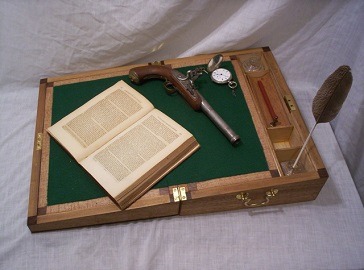
You may be interested to learn, that Frances and I, on a whim, decided to take a trip to the Ship Inn, Wincle, south of Macclesfield in Cheshire, to see whether the inn still had the information on this relic, which was supposedly detailed on a paper or plaque hanging on the wall.  When we arrived at this charming hostelry, however, there was no such plaque.  The present licensee was aware of the story, but the information had probably been removed by his predecessor.  I offered to supply the missing information, on the grounds that, if this were not done, then future generations would be left unaware of this rather intriguing piece of history.  The licensee agreed, and accordingly I sent him, having first conferred with our secretary, a framed copy of the following:
 

The Ship Inn in 1745.


In December 1745, Alexander Maclean, a straggler from Bonnie Prince Charlie's retreating highland army, called at the Ship Inn, Wincle, and demanded some food.  Whilst he was eating, the landlord, Joseph Cunliffe, succeeded in snatching up the highlander's musket, and held him at gunpoint until the arrival of the local magistrate, Sir Peter Davenport, before whom the said Alexander Mackclean (sic)


"Confesseth and Sayeth that he was Born in the Highlands of Scotland and was taken in wth the Rebells at Athol in Scotland aforesaid and marched with them until he was apprehended." 


This deposition was signed with his mark.  Maclean was imprisoned under the harshest conditions, firstly in Chester Castle, and later in the castle at York, where he was sent for trial.  He was a pedlar, pleaded guilty, and was sentenced to death on October 2nd 1746, but the sentence was later commuted to transportation for life.  Until half a century ago, the "Rebel Gun" could be seen at the inn, hanging on a lintel above the bar. His subsequent fate is unknown.


* * * * *


M. Kelvin, 1745 Association, January 2008.
 
 
We had a delightful meal at the Ship Inn, well worth a visit, and usually closed on Mondays!  Incidentally, as you are aware, a copy of a Manchester newspaper dated 1745 was at one time preserved at the inn, along with the gun.  Clearly this had nothing to do with the luckless Maclean, who probably had no English whatsoever, and certainly could not read or write anyway!


Previous correspondence regarding the "rebel gun" in Wincle is archived but available should anyone wish to see it. Just drop me a line

Lewie


08.01.08

From James Lamont

Hi Lewie, 

I saw your list of Jacobite publications on the internet and was wondering if you could give me any help with this one. I am currently writing a dissertation as part of my final year at university and the title of my dissertation is "An Assessment of Jacobite Support in Atholl c.1745". I'm struggling to find much material to help me other than primary sources at Blair Castle. I am specifically looking for evidence to show that the common tenants of the land were forced into joining the Jacobite army and equally, given that Atholl was a divided area with the 2nd Duke being a Hanoverian supporter, I am looking for any evidence to suggest that some of those people on his land were forced into the government forces. Of course anything else will be of use but at the moment this is where my area of focus is. I would be very grateful if you could point me in the direction of any material that you may have or know of that will help me with this dissertation.
 
Regards
 
James Lamont

Hello James
                 I will give the matter some thought and take a look at my own library but at the moment I cannot think of a particular publication that might deal with this matter specifically. However the 1745 Association is collectively very knowledgeable and I am sure someone will be able to help. I will email you again and also post on this site if any info is forthcoming.
Good luck with the dissertation
Lewie

I am informed that 1745 Association Secretary Miss Christian Aikman was able to help Mr Lamont with this request.

L


07.01.08

From Alistair McCabe


Dear Lewie
 
      While reading the most recent copy of `The Jacobite` no 125 - there is a reference to Co. John Roy Stuart (p15). The text reads " It is believed he died c1752 in France, but the circumstance and place of his death is unknown".
     The Rev` Forsyth in his book `In the shadow of Cairngorm` sheds no further light on the precise year and place of his death. Affleck Gray in his book `Legends of the Cairngorms` gives the place of death at St. Omer in France 1752.
     I wonder if there are any records here with regards to John Roy`s final resting place? I know this question was asked here on the 1745 Association web site, presumably without response.
 
     Best Wishes to all
        Alistair McCabe


Any thoughts anyone?

Lewie


07.01.08

From Mark Ocepek


Dear Lewie:
 
I saw your website and I have a question for you.  I have a very old portrait, which is an original oil painting of General Sir Robert Cadell, K.C.B. (1825-1897).  I know that he wrote a book called "Sir John Cope and the Rebellion of 1745".  I can't seem to find a copy of the book.  I was wondering if there is a way to purchase a copy of the General's out of print book? 
 
Also, I obtained on-line from Scottishpeople.com a copy of the General's last will and testament.  It said in his writings that his oil paintings including his portrait hung in his family home of "Cockenzie House".   Where could I go to have a professional in Scottish Art History look at the oil painting?
 
I can send you a digital picture of the portrait of the General if you would like.  Thank you for your time on this matter.
 
Best regards,
Mark


Dear Mark
              Thanks for your letter 


Cadell's book is not easy to find these days. I recommend that you try www.bookfinder.com if you are not aware of that site already. The book will cost you at least £75.00 and possibly much more if you can actually find one.
 
There is an organisation that concerns itself with the Battle of Prestonpans and I believe there are moves afoot to republish Cadell's book this year. Plans are in their formative stage but I refer you to http://www.battleofprestonpans1745.org/heritagetrust/html/news/show_news.asp?newsid=2228 where you will find details, together with links to the rest of the site.  I am sorry that I have little advice for you with regard to your oil painting. Your email gives no indication of your geographical location but wherever you are my initial advice might be to visit a reputable auction house that has experience of this type of work and see what they say. At the very least they ought to be able to advise you further.
 
Lewie


Dear Lewie:
 
Thank you very much for your information and the web link that you gave me.  To let you know, I am in Florida, USA.  I will try to write someone at the group that you gave me and ask them for any additional info.  
 
I hope that they do re-publish the General's book, because it is a very good and informative piece of history on the Battle of Prestonpans.  The General's brother, Col. Thomas Cadell, VC, really loved the book and went to great lengths to get it published.  He stated that his brother knew so much of the battle and that his book was a great work of his life and of military history.  I hope to help in any way that I can in the efforts to get the book out to the public.  
 
All the best to you,
Mark


Back to 1745 Association Homepage